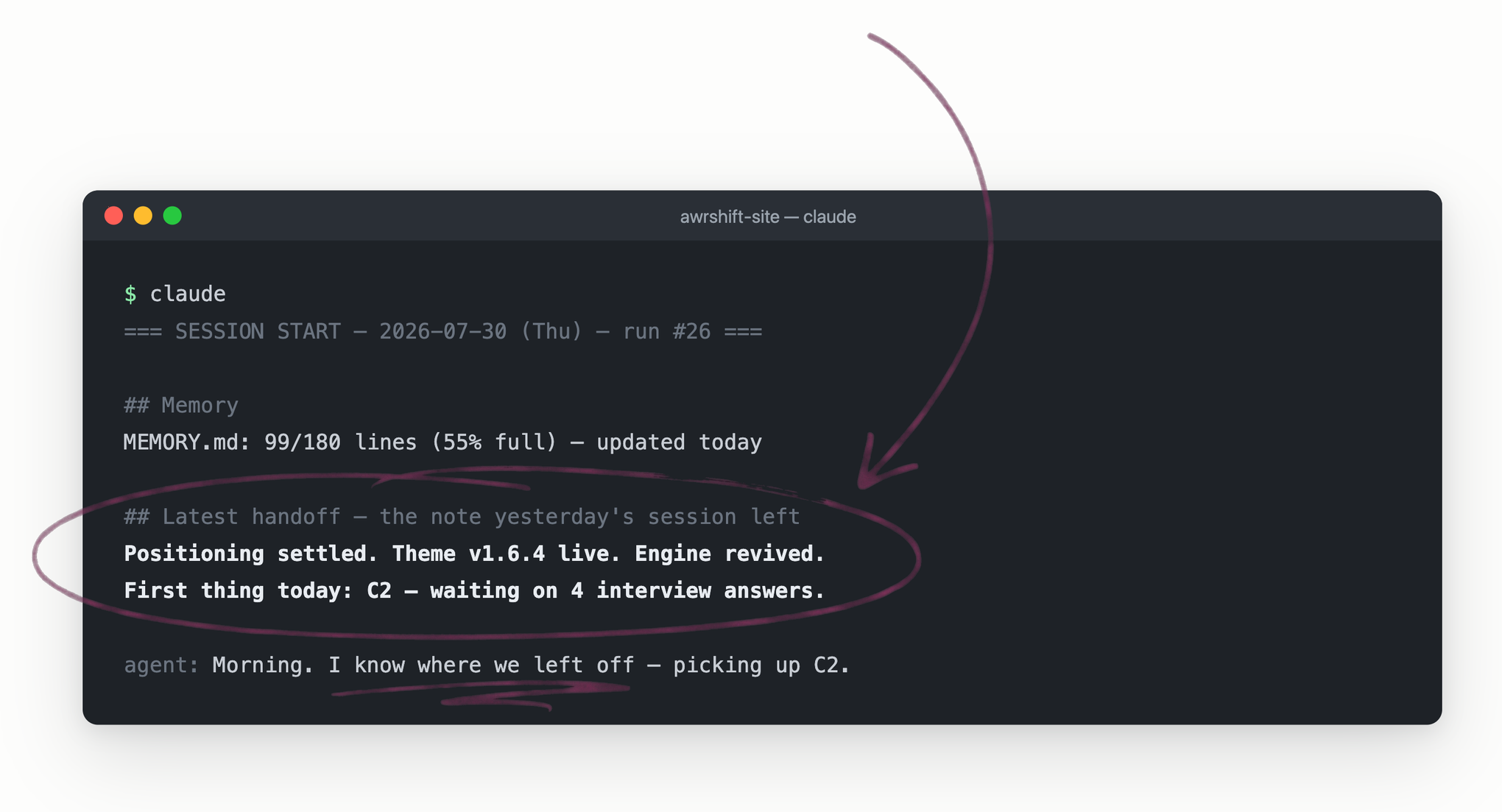
I test new AI tools every week; research is part of how I work. And everything I actually ship still runs on one system I started about half a year ago. Client work, my own products, this site. Even people far outside tech run copies of it: one of them is Kate, a marketer who liked it enough to pass it on to her husband, a military doctor. More on her later. This article opens a series about that system, and about how to build your own.
The boring list
Here is what runs on that one base today. Client automations at my day work. My own products. This site and the engine that publishes part of it. And the working folders of the people I’ve onboarded: marketers, HR specialists, business analysts, designers, engineers. Different verticals, different levels, one foundation. Each of them is a copy of the same starter kit, an open template I keep on GitHub.
The list is boring on purpose. The point of a foundation is that nothing about it is exciting week to week. The excitement lives in what gets built on top.
The expensive road here
I didn’t start here. First I spent a long stretch building agents the serious way: complex, custom-built, wired into production. Impressive on a diagram, expensive to keep alive. They aged fast and delivered little; the market would shift and the whole construction turned into maintenance.
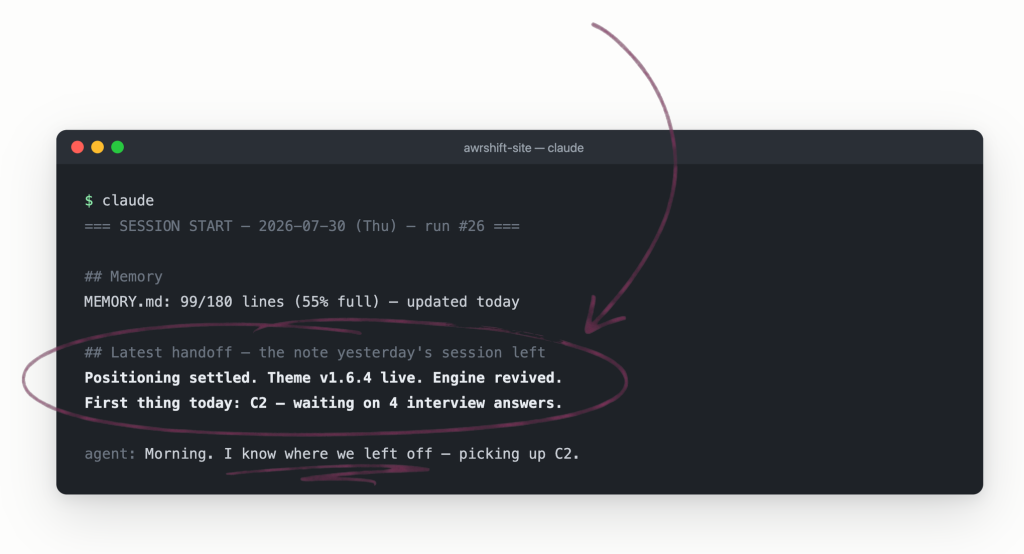
The stable shape arrived later, and it was humbler: an agent system on Claude Code, built around memory, rules, and working patterns instead of architecture for its own sake. That’s when the results started. And that’s the shape that has survived every market turn since, not because it’s clever, but because it’s simple enough to keep adapting.
A different category of movement
The move from a chat window to a real agent system is hard to describe without sounding like an ad. The closest I’ve come: you’ve been riding a scooter to work, and one day someone hands you the keys to a sports car. It isn’t an upgrade. It’s a different category of movement.
But nobody falls into that car by accident. You have to arrive at it consciously. Most people don’t know there’s anywhere to arrive at, which is a big part of why this series exists.
The loop that beats the hype
Now the mechanism, because there is exactly one and it explains everything above.
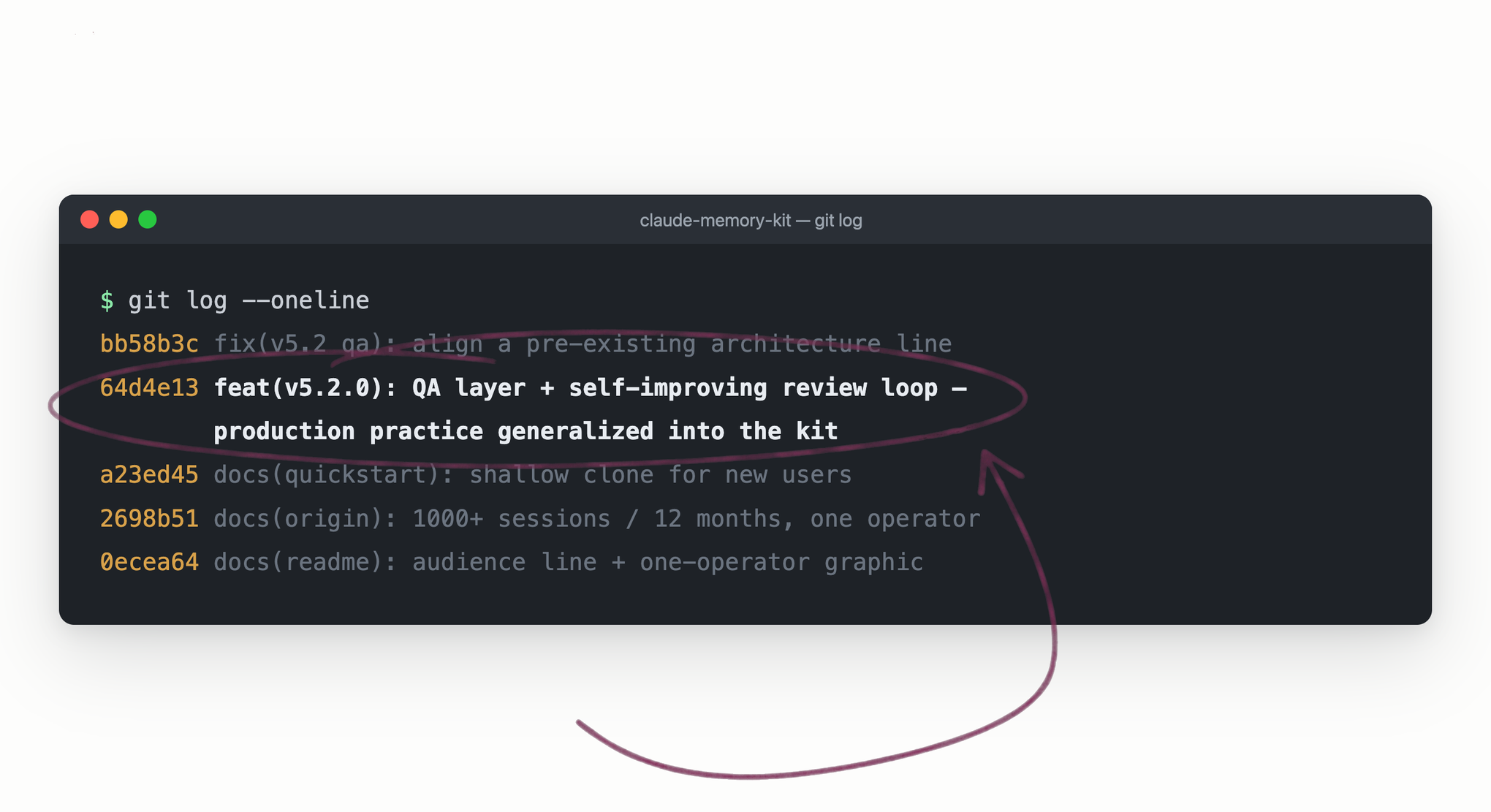
Every project runs its own clone of the kit. When any of them finds an improvement, a better pattern of working together, a rule that prevents a class of mistakes, a cheaper way to keep memory honest, that improvement goes back into the base. The next time any clone updates, all of them get stronger at once.
That’s the whole trick.
Tools compete for your attention. A foundation compounds.
A new service can be better than my system at one thing on launch day. It cannot keep up with a base that quietly absorbs the best of everything I and the people around me learn, week after week. After half a year, the system isn’t six months better. It’s every-project-times-six-months better.
Not about me
The strongest evidence that this is about the system, not about me, is a chain I watched from the outside. Kate, the marketer from the opening, an advanced chat-AI user who had grown honestly disappointed with it, took the kit and ran. Her story deserves its own article and will get one. Then she passed the kit on: to her husband, a military doctor, who she says is more than satisfied with what it does for him. To her sister, also a marketer. And to her music teacher, an elderly Italian, who she tells me worked the system out and is delighted with it.
None of these people are engineers. That’s the pattern I keep seeing: the roles don’t matter. The system is universal first, and only later grows into the shape of your specialization.
The map
Each article in this series has the same spine: one real mechanism, one lived story, one thing you can act on. No tool reviews, no launches, nothing to buy. Here’s where we’re going:
- Why every AI session starts from zero. Whose fault that actually is (not yours).
- The advanced user’s ceiling. You can master prompts and custom GPTs and still feel the tool isn’t amplifying you.
- The partnership model. The attitude that separates people who get results from people who collect contexts.
- Where an agent’s memory lives. The four layers, explained without a line of code.
- The simple rules. The small disciplines that compound into performance.
- Onboarding a non-technical person. The hard part is a mindset, not a technology.
- Who already switched. Marketers, doctors, teachers, and what they actually built.
- The system that outlives the hype. Why churn is the environment, not the enemy.
One more thing
While the agents carry their share of the work, my pauses go to breath and attention, not to feeds. That practice is part of how this system is led, and it has its own place later in the series.
Start anywhere on the map. The bridge holds from either end.
Written by Serhii Kravchenko. Drafted in dialogue with the site’s agent from Serhii’s spoken material, edited and approved by him.