Introduction: The Model Shift in Enterprise Site Architecture
Content volume no longer guarantees visibility. Historically, enterprise brands scaled organic traffic by flooding search engines with thousands of targeting pages, but modern search algorithms now penalize these bloated directories because they damage your crawl budget and dilute critical quality signals across your entire domain. This bloat is dangerous. Consider the case of QuickBooks. The financial software giant successfully reversed a slow decline in organic traffic by deleting more than 2,000 outdated blog posts from its content library (Source: Animalz). Legacy pages fail. They often turn into zombie pages that fail to meet modern search intent, driving up rendering cost while signaling low quality to search engine site classifiers. Do not hoard dead weight. Instead of keeping this clutter, modern enterprise architectures prioritize lean indexing status to protect valuable link equity.
How do you protect your indexation status? In this strict environment, a modern seo site audit must evolve from a simple checklist into a rigorous, data-driven pruning mechanism. Content pruning is the strategic process of removing, updating, or consolidating low-value, outdated, or underperforming website content to maximize SEO ROI (Source: Grab Your Skill). The financial returns are immediate. They are also highly measurable. Seer Interactive deployed this strategy for an insurance client, reversing a painful -17.3% YoY traffic decline to achieve a +23% YoY increase by pruning low-performing or outdated content (Source: Seer Interactive). Also, Inflow demonstrated that pruning low-performing blog content led to a 64% increase in strategic content revenue for an eCommerce brand (Source: Inflow). Monitor your site constantly. To maintain authority, modern sites must evaluate their citation footprint and analyze server log files to monitor actual crawl frequency because systems that ignore this operational reality will find themselves filtered out of both traditional indexes and generative AI retrieval engines.
The Algorithmic Engine: Crawl Budget, Index Tiering, and Site-Wide Quality Signals
Search engines face a hard limit. They must constantly balance their own resource constraints against massive web growth. Googlebot calculates crawl budget as the set of URLs it is willing and able to crawl within a specific timeframe, mathematically determined by multiplying crawl capacity limit by crawl demand (Source: Google Search Central). Rendering JavaScript drives up computational processing requirements. This forces search engines to categorize pages into a strict indexing tier, postponing expensive rendering steps for pages that do not immediately demonstrate value. What does this mean? For large enterprise sites, a high rendering cost directly reduces crawl frequency for your money pages. When robots waste precious CPU cycles on redirect loops, endless redirect chain issues, or utility pages that should remain unindexed, your most valuable content suffers. In fact, Linkbot notes that crawl budget allocation is heavily influenced by domain authority, server performance, and content quality, with thin, duplicate, or low-value pages diluting overall crawl efficiency.
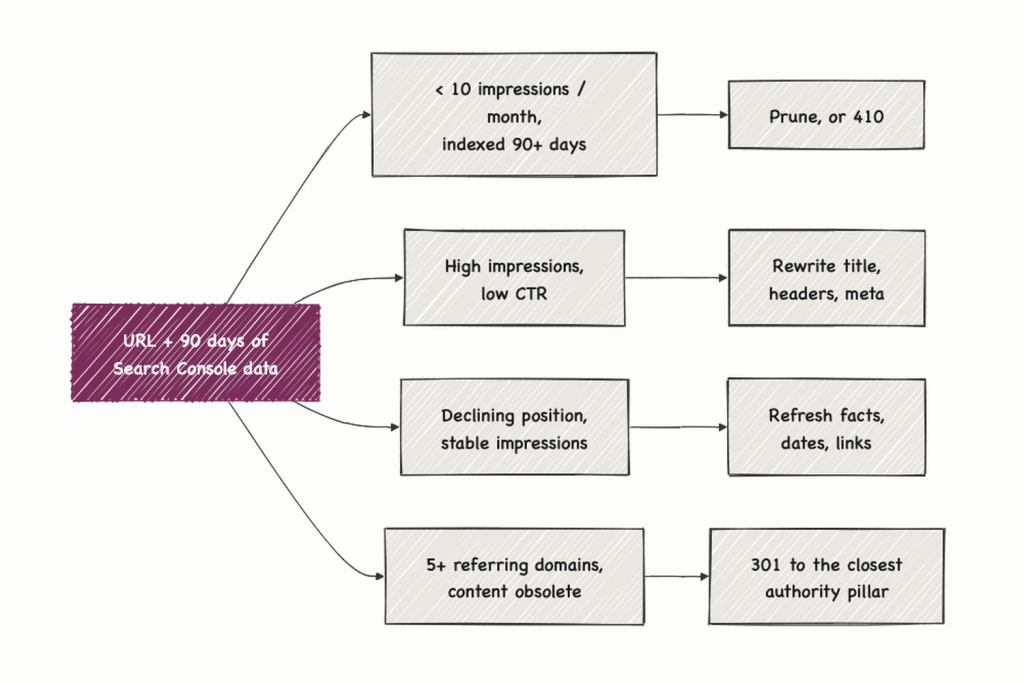
Diluted efficiency triggers algorithmic downgrades. Google’s automated ranking systems use site-wide signals and classifiers alongside page-level signals to evaluate overall site quality, meaning low-quality sections can drag down the performance of your entire domain (Source: Google Search Central). High-performance pages lose visibility. This happens when they are surrounded by zombie pages that exhibit severe content decay. How does the system identify these weak points? Google’s AI-driven helpful content system uses machine learning to prioritize reliable, people-first information over content created solely for search engine rankings (Source: Google Search Central). This automated site classifier processes your entire digital footprint to measure aggregate quality. If your site houses thousands of outdated pages that lack unique information gain, the algorithm downgrades your authority. Protect your quality signals. Google continues to dominate the global search engine market, holding approximately 80.85% to 90.04% of the global search traffic market share (Source: Omnibound). Every seo site audit must therefore use a strict decision tree to evaluate whether underperforming URLs should be consolidated, redirected, or pruned to protect overall link equity. Keep your directories clean. Otherwise, you open the door to competitors.
Generative Engine Optimization (GEO) and the LLM Citation Footprint
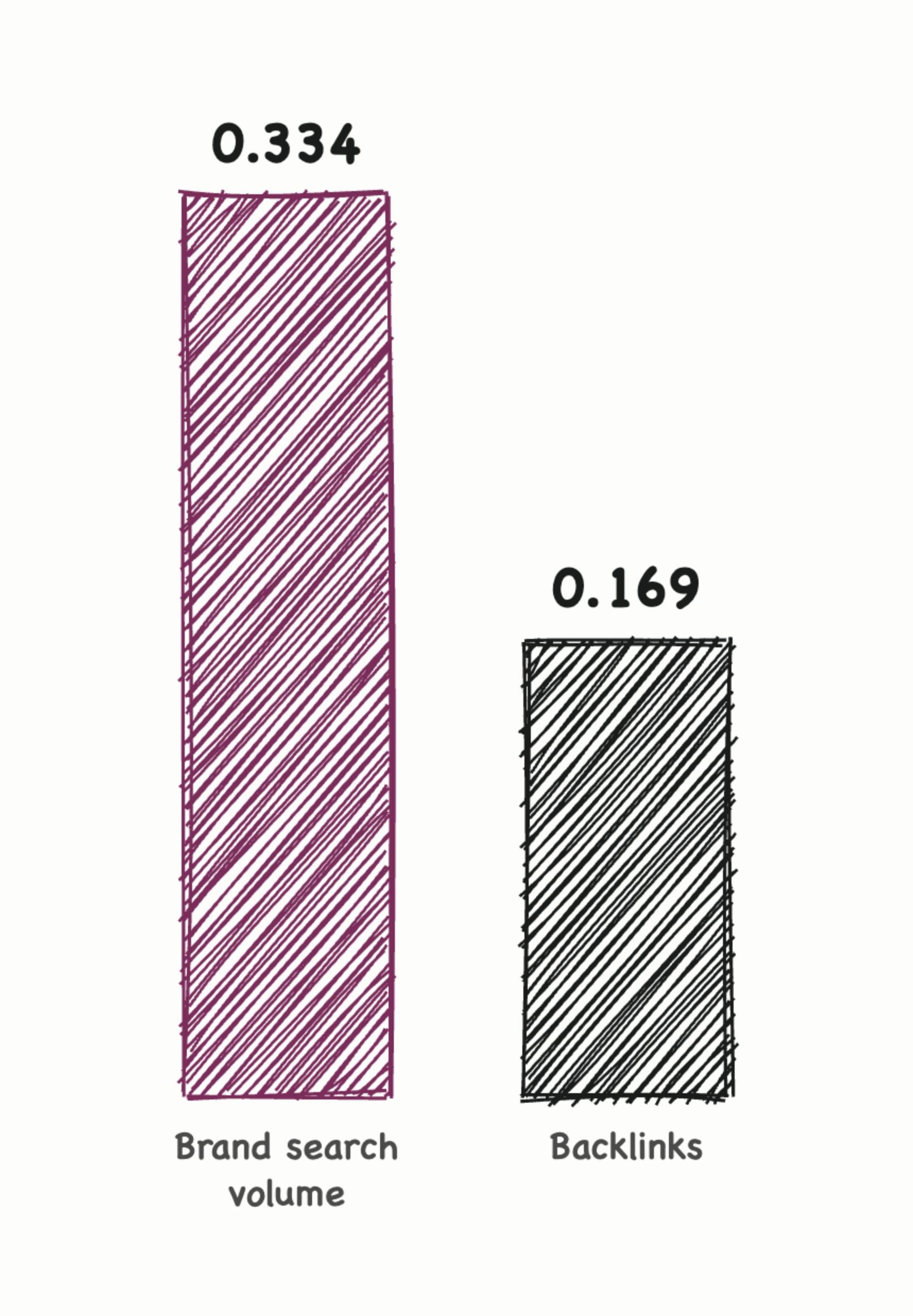
Building on this algorithmic pruning, the modern seo site audit must now adapt to a massive structural shift in organic visibility. Traditional link-based indexing is rapidly giving way to Large Language Model (LLM) training set ingestion. This transition is incredibly stark. Indeed, zero-click searches have risen to 68% of US Google queries, while traditional search volume is predicted to drop by 25% as users shift to AI-powered answer engines (Source: Search Engine Land). Generative Engine Optimization (GEO) is the practice of structuring and refining digital content to perform well and be accurately summarized by AI-driven search engines (Source: Coursera). How many sites survive this transition? Only 11% of websites are currently cited by LLMs, with brand search volume (+0.334 correlation) and backlinks (+0.169 correlation) serving as top predictors of LLM citations (Source: The Digital Bloom).
Protecting your brand equity within AI-generated summaries requires exceptional data integrity. Research shows that 50% to 90% of LLM responses are not fully supported or are contradicted by their sources, and LLMs achieve only a 4% to 18% accuracy rate in identifying correct citation matching (Source: PubMed Central PMC12003634). Clean structured data and rich information density prevent these hallucinations. Writers must optimize for several key ranking factors:
- URL accessibility and SEO rank
- Fan-out rank and query-answer match
- Presence in Common Crawl, Wikidata, or Reddit (Source: LinkedIn/Chris Long)
Adding expert quotes, clear statistics, and improving readability can significantly boost visibility in generative engine results (Source: Princeton University via Reddit GrowthHacking). This ensures your citation footprint remains intact. These optimization steps are mandatory for modern brand survival.
The Practical Classification Framework for Enterprise Content
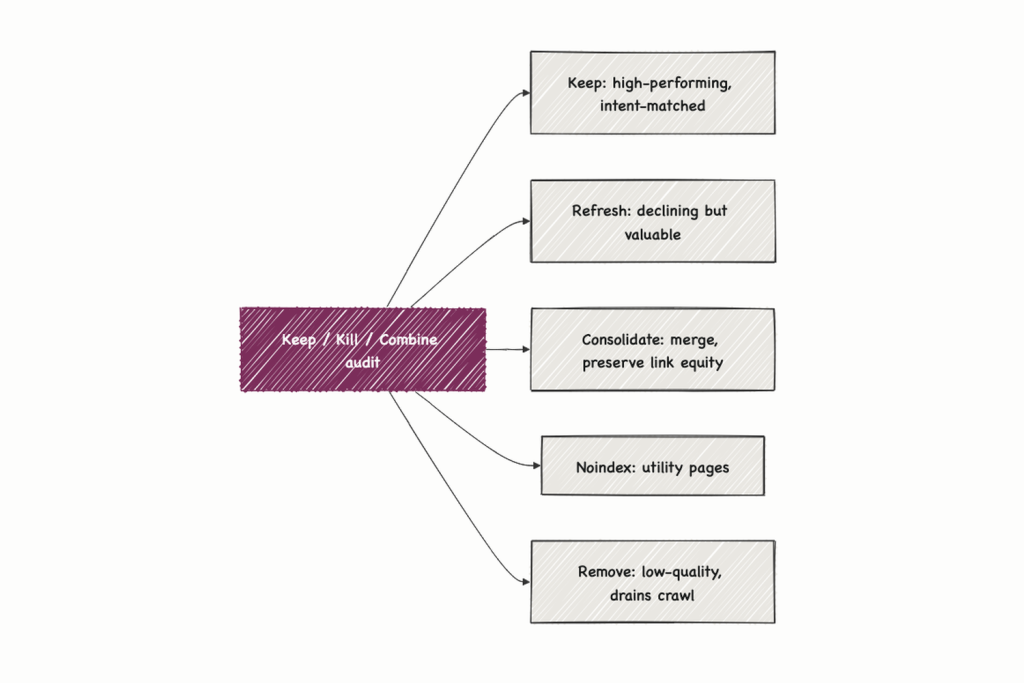
Building on this shifting citation footprint, a modern seo site audit must systematically evaluate how human and machine-generated assets perform. Your team cannot rely on intuition. Decisions within a content pruning framework must rely on objective, multi-source data and diagnosis rather than gut feeling, evaluating gaps in content, traffic performance, and social signals (Source: SEO-Kreativ). How do we classify these vast digital libraries? Managing this scale requires content lifecycle management (CLM), which is a systematic six-stage approach (planning, creation, management, distribution, optimization, and preservation/retirement) to manage content assets (Source: Strapi). A structured content audit decision tree, such as the Keep/Kill/Combine framework, converts raw data into clear actions: Keep, Refresh (Update), Consolidate (Combine), Noindex, or Remove (Source: SEO-Kreativ).
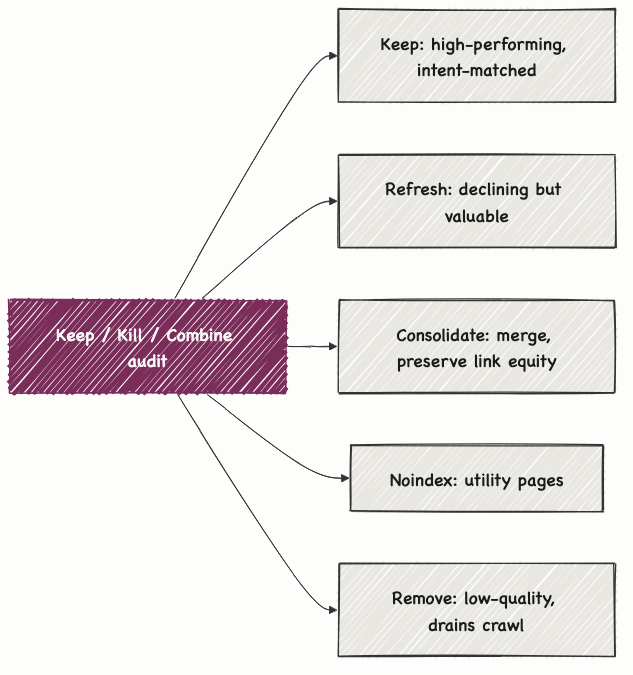
- Keep: Protect high-performing assets that match search intent.
- Refresh: Update declining resources to capture new organic traffic.
- Consolidate: Merge redundant articles to preserve link equity.
- Noindex: Hide utility pages while keeping them accessible.
- Remove: Prune low-quality URLs that drain rendering cost.
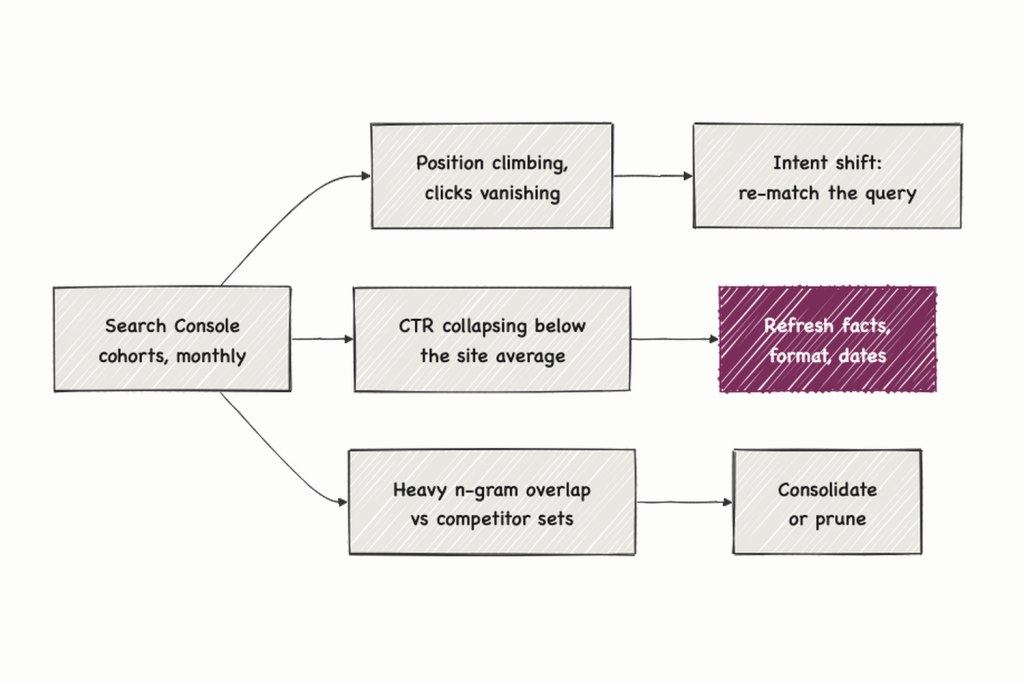
Actionable categorization prevents algorithmic stagnation. Updating and keeping content fresh through regular optimization can result in up to 106% growth in organic traffic (Source: HubSpot via Bynder). That is a massive return on existing assets. Conversely, ignoring your zombie pages degrades the indexation status of critical pages. These zombie pages are indexed pages that provide little to no SEO value or traffic; they can be identified in Google Search Console as URLs with zero clicks and very low impressions (Source: TDIT Group). Why do they exist? These assets often consist of pagination pages, category pages, or indexation discrepancies where search engines index far more pages than the site’s meaningful content count (Source: Taylor Joseph Scher via LinkedIn). Your audit must isolate these dead-weight URLs by cross-referencing server log files with current traffic. This keeps your domain healthy. Let us look at how these technical steps translate into actual site authority.
Technical Execution Strategy: Redirects, Status Codes, and Noindex
Building on this classification framework, executing a technical seo site audit requires precise server-side execution to clean up indexation discrepancies. Actionable code selection prevents crawler confusion. Every hop in a redirect chain adds latency, depletes the crawl budget, and dilutes PageRank, making redirect chain cleanup a critical technical task (Source: Siteimprove). Why tolerate this structural drag? Eliminating these multi-stage hops immediately improves crawl frequency and reduces rendering cost. When multiple pages compete for the same search intent, a 301 redirect is the preferred option, allowing the site to capture and pass on valuable backlinks and traffic (Source: Reddit r/TechSEO). Conversely, keeping dead weight online degrades your site classifier. A 410 Gone status code is highly effective and ideal for signaling to search engines that a page is permanently deleted with no equivalent replacement, ensuring faster removal from the index (Source: Shopcircle). Selecting the correct server response ensures search engine crawlers spend time only on high-performing, valuable URLs.
Redirect and Status Code Protocols:
- 301 Redirect: Consolidates duplicate search intent and preserves backlinks (Source: Reddit r/TechSEO)
- 410 Gone: Signals permanent deletion for faster index removal (Source: Shopcircle)
- Noindex Tag: Restricts utility pages from indexing while maintaining user access (Source: GSQI)
Link reclamation targets previously removed or broken backlinks to maintain SEO equity, recovering valuable PageRank that would otherwise be lost when Google recalculates authority (Source: WooRank). This process protects your citation footprint. However, pruning decisions must not be based on traffic alone; technical audits must evaluate internal and external linking, multi-channel traffic, and sitemaps to avoid reducing total visibility (Source: Marco Giordano via LinkedIn). Your team must review log files to see how search bots interact with these changes. To address low-quality or thin content, webmasters should either improve, noindex, or permanently remove the content depending on its volume and potential value (Source: GSQI). This systematic approach preserves link equity while keeping your indexing tier clean. Applying these protocols prevents redirect loops and protects organic traffic. This technical hygiene prepares your architecture for advanced optimization.
Post-Pruning Metrics and Governance Models
Post-pruning verification turns temporary traffic spikes into permanent authority. How do webmasters validate the success of a technical seo site audit? Search Engine World explains that a modern content audit uses Google Search Console, crawlers, and log data to triangulate and identify underperforming pages that are quietly hurting site performance. Examining your raw log files reveals immediate shifts in search bot behavior. Crawlers shift their focus away from dead weight, which reduces rendering cost and increases crawl frequency on high-performing URLs. This redistribution of resources directly raises the indexing tier of your remaining core pages. Have you seen an increase in organic traffic? Monitor the indexation status of your main categories to confirm that Google has stopped crawling zombie pages. Watch for any accidental redirect loops or a broken redirect chain that could leak link equity. Additionally, tracking LLM visibility metrics daily can help detect SEO content decay early, though Wellows notes that data-driven ground truths are preferred over LLM-as-a-judge methodologies.
- Log file analysis: Confirms crawl budget redistribution.
- Indexation status monitoring: Verifies the removal of zombie pages.
- Authority tracking: Measures organic lift on remaining core pages.
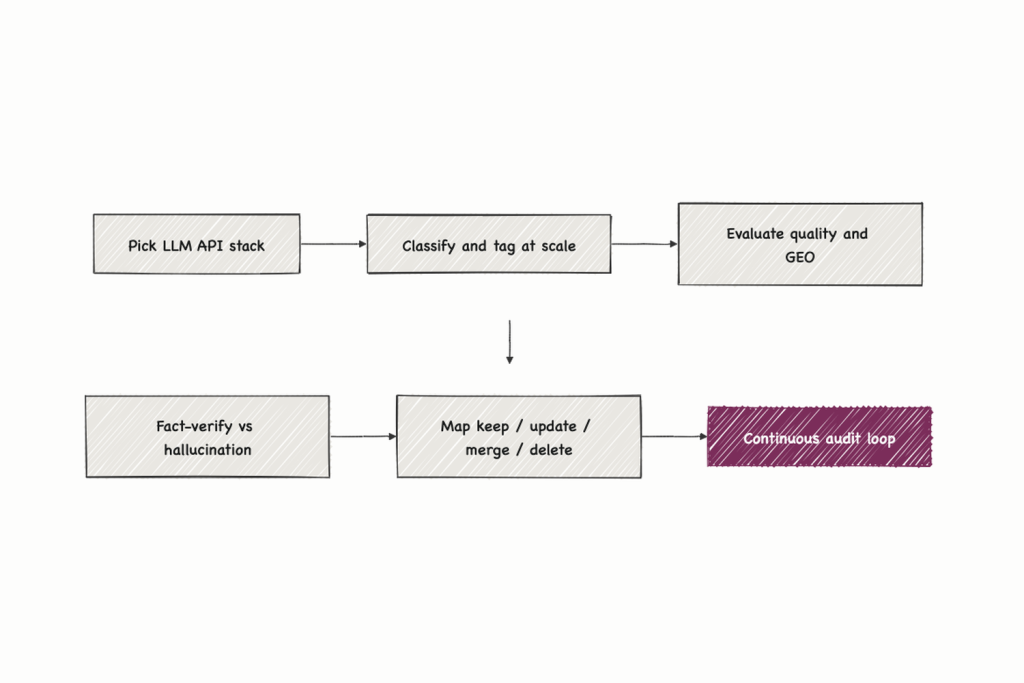
Preventing future content bloat requires strict governance policies. Conductor outlines that content pruning is executed as a strategic three-step process: creating a complete Content Inventory, conducting a Content Audit, and implementing subsequent actions. Do not let your site slide back into decay. Enterprise content lifecycle policies, such as those in Egnyte’s Secure & Govern, are utilized to define document retention, deletion, and archival settings systematically (Source: Egnyte). These automated rules prevent useless utility pages from accumulating over time. Every new piece of content must demonstrate unique information gain to justify its creation. This strict gatekeeping protects your citation footprint and maintains a strong site classifier. What happens to pages that fail to meet performance targets within six months? A clear decision tree must route them to be merged or assigned a 410 status code. Consistent enforcement of these boundaries keeps your digital architecture lean, fast, and optimized for search engine bots. Learn more about automated content maintenance to protect your rankings.
Frequently Asked Questions
What is Technical SEO auditing and issue detection in the context of content pruning?
Technical SEO auditing and issue detection serve as the foundation for successful content pruning. This process identifies thin, duplicate, or low-value pages that dilute crawl efficiency, as noted by Linkbot. Addressing these issues allows enterprise sites to reverse traffic declines and boost organic performance (Seer Interactive).
How do site-wide quality signals impact high-quality pages during an seo site audit?
During an seo site audit, it is vital to address site-wide quality signals. Google Search Central explains that automated quality classifiers evaluate overall domain quality, meaning low-quality sections can drag down high-performing pages. Pruning underperforming content ensures these site-wide metrics do not suppress your best content.
When should an SEO manager choose a 410 Gone status code over a 301 redirect?
During content pruning, an SEO manager should use a 410 Gone status code for outdated pages with no equivalent replacement or link equity. Unlike a 301 redirect, which passes authority to a new URL, a 410 tells search bots the page is permanently removed, preserving your crawl budget.
How does pruning low-information-gain pages support Generative Engine Optimization (GEO)?
Removing low-information-gain pages helps focus search engines on high-quality content optimized for Generative Engine Optimization (GEO). Since only 11% of websites are currently cited by LLMs, streamlining your site increases the chance of securing an LLM citation by highlighting expert, readable content (The Digital Bloom).
What is the best way to measure crawl budget improvements after executing an audit?
The most accurate way to measure crawl budget improvements is through log file analysis to track search bot behavior. Combining log data with the GSC API using Python allows you to programmatically verify if search engines are focusing more attention on your high-value pages.
Written by AWRSHIFT Team